How Ridge Wallet Built an 8-Figure Brand: A Complete Funnel Breakdown

How Ridge Wallet Built an 8-Figure Brand: A Complete Funnel Breakdown

Author

Published Date

June 4, 2026

Ridge Wallet has been one of the most durable brands in e-commerce for years. What started as a wallet company has expanded into men's rings, travel kits, tech bundles, and chargers -- and the brand continues to generate eight figures annually while maintaining a loyal customer base that buys across an expanding product line.

The unit economics behind Ridge are fundamentally different from a consumable brand. There is no monthly repurchase cycle and no subscription program to fall back on. Every part of the funnel has to work harder to maximize AOV on the front end and drive cross-category purchases over time. That constraint has made them exceptionally good at things most e-commerce brands treat as afterthoughts: checkout upsells, email sequence design, AOV incentives, and creative format diversity.

This article breaks down the Ridge funnel from homepage through ad library -- what they are doing, why it works, and what you can implement for your brand regardless of category or product type.


Watch the Full Breakdown on YouTube

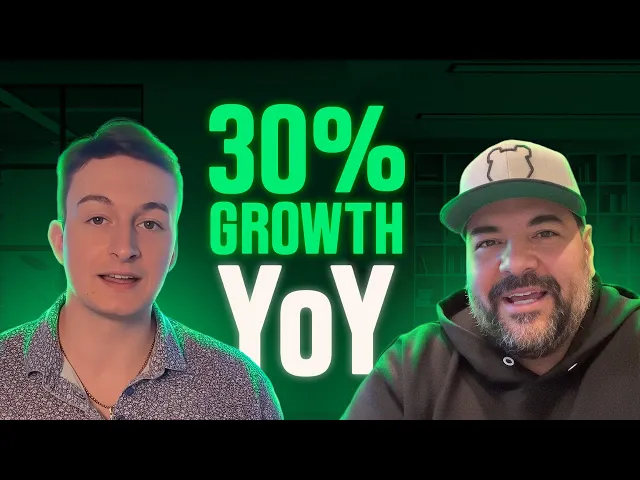
Patrick walks through the Ridge Wallet funnel live -- homepage, checkout upsells, email flows, and ad creative -- with specific breakdowns of every tactic and what to implement for your brand.

The Homepage: Navigation Over Persuasion

The Ridge homepage has a different job than most e-commerce homepages. Because the brand now sells wallets, rings, travel kits, battery packs, and tech bundles, the homepage has to function as a product navigator more than a persuasion engine. A new visitor arriving at ridge.com needs to quickly understand what the brand sells across all categories and find their starting point.

The page accomplishes this with a clear category structure: wallets at the top as the established hero product, then men's rings, travel kits, and tech bundles. Below the hero, new collections are highlighted alongside individual product callouts and a 'shop by product' section that effectively turns the homepage into a structured catalog. The design is clean and the product photography is excellent -- simple, bold images with minimal copy.


Multi-SKU Homepage Rule

When your brand sells across multiple unrelated categories, the homepage's primary job shifts from conversion to navigation. Give visitors a clear starting point for each category, highlight new arrivals prominently, and make the best seller obvious within each category. A confused visitor does not convert -- they leave.


Ridge also uses the homepage to communicate current promotions and new collection launches prominently. When a new colorway or limited edition drops, it gets homepage placement. This keeps the page fresh for repeat visitors and gives loyal customers a reason to return even without a promotional email trigger.

Checkout Upsells: AOV Is the Only Lever

For a non-consumable brand, average order value is the primary economic dial. Ridge cannot rely on monthly repurchase cycles to make acquisition costs work -- the margin has to come from what each customer buys in their first transaction. The checkout experience reflects that priority at every step.

When you add a product to cart, Ridge immediately surfaces complementary accessories in the cart drawer. Adding a power bank triggers offers for Find My-compatible cards, phone accessories, and accessory bundles. Adding a wallet triggers cases, card holders, and key attachments. The upsell carousel is not generic -- it reflects the specific product in the cart.


Checkout Touchpoint

Ridge Tactic

AOV Impact

Cart Drawer

Complementary accessories at 30% off, category-matched to cart item

Increases AOV through category cross-sell

Cart Page

Additional upsell row with related items and bundle suggestions

Second opportunity before payment commitment

Checkout Page

Final call-to-action upsell visible during payment form entry

Captures late-stage add-ons from committed buyers

Welcome Email

30% cash back on first purchase applied to future order

Drives time-to-second-purchase and LTV


The Non-Consumable AOV Problem

If you sell products that are not replenished regularly -- accessories, tech, apparel, home goods -- you cannot rely on repeat purchase frequency to make acquisition economics work. Every dollar of CAC has to be justified by what the customer buys in that first session or within the first 30 to 60 days. Checkout upsells are the primary mechanism for recovering that cost.


30% Cash Back vs. 30% Off

Ridge's welcome offer uses 30% cash back, not 30% off. The distinction matters. Cash back applies to a future purchase -- which means it only delivers value if the customer comes back. This structure incentivizes the second purchase while preserving margin on the first. A 30% discount on the first order costs full margin immediately. Cash back costs margin only if the customer returns, at which point you are already profitable on the relationship.

The Welcome Email Sequence: Convert, Educate, and Build Urgency

Ridge's welcome sequence does three things in order: deliver the offer, educate on the product line, and build urgency before the welcome offer expires. The sequence is structured around the 30% cash back mechanism, which gives the brand a reason to send multiple emails without each one feeling like a hard sell.


Email

Focus

Key Element

Email 1

Welcome + offer delivery

30% cash back offer delivered immediately with strong hero image and product introduction

Email 2 (48 hrs)

Product line education

MagSafe collection spotlight with up to $65 off -- pushes toward higher-value SKUs

Email 3

Social proof

100,000+ five-star reviews, customer testimonials, brand trust signals

Email 4

Plain text personal email

From Austin on the product team -- tells the story behind the Heritage Edition leather collection

Email 5

Browse abandonment

Product reminder with 99-day free returns and lifetime warranty objection handling

Email 6+

Urgency sequence

30% cash back ending soon, last call reminders with scarcity framing


The plain text email from 'Austin on the product team' is one of the most effective elements in the sequence. It reads like a personal note from someone who worked on the product, sharing the design story behind the Heritage Edition leather collection. The copy is genuinely good -- it talks about doing leather the right way or not at all, about wanting the wallet to tell your story, about oil-wax leather that develops character over time. That kind of copy does not read like marketing; it reads like someone who cares about their craft explaining what they built.


The Plain Text Email Advantage

Plain text emails -- formatted to look like a personal message rather than a designed campaign -- consistently outperform HTML campaigns in terms of open rates, click rates, and response rates. TVG recommends that 10 to 20% of all sends include plain text emails sprinkled into both flows and campaign calendars. The format creates authenticity signals that designed emails cannot replicate.

Ad Creative Strategy: Hundreds of Ads, Multiple Format Types

Ridge is running hundreds of active ads at any given time. For a product like theirs -- visually sophisticated, design-forward, with multiple colorways and new collection drops -- creative volume and format diversity are both critical. Different customers respond to different entry points, and the algorithm rewards accounts that provide more options to test.

Static and Still Ads: Product Photography as the Hero

A significant portion of Ridge's ad library is static images -- products on clean backgrounds with minimal text and copy. For a brand where design and material quality are core to the value proposition, letting the photography do the persuasion makes sense. The creative does not need to explain the product; a well-lit image of the carbon fiber wallet against a neutral background communicates quality, sophistication, and the category upgrade immediately.

Each collection has its own visual identity. The hot rod collection has a vintage newspaper aesthetic. The tech products have an Apple-adjacent clean look. The rings use lifestyle photography. Rather than a single brand aesthetic across all ads, Ridge lets each product line speak in its own visual language -- which means different ads resonate with different audience segments.

UGC and Creator Ads: Demonstration Over Lifestyle

Ridge's UGC ads focus on product demonstrations rather than aspirational lifestyle content. Creators show the wallet fitting in a pocket, unboxing the free bag, comparing it to the old bulky leather wallet. These ads work because they address the actual purchase question for most buyers: does this actually fit and work as advertised?

The hook strategy across UGC is varied and intentional. 'There's no way they did this' creates pattern interruption. 'Watch this -- it just works' leads with a product demonstration. 'No bulk, no bite in the pocket' addresses the specific friction of carrying a thicker wallet. Each hook targets a different moment of hesitation in the purchase journey.

MKBHD Influencer Collaboration: Credibility Through Authority

The collaboration with MKBHD (Marques Brownlee, a prominent tech YouTuber) is one of Ridge's most effective creative strategies. MKBHD created a visual hook around transparent tech -- showing an old iMac, a GameCube controller, and asking viewers to remember when technology was transparent -- before revealing the new transparent Ridge power bank as a modern version of that aesthetic. The ad is genuinely clever because it creates an emotional connection through nostalgia before introducing the product.


INFLUENCER CRITERIA

Category Authority: The influencer is trusted within the specific product category -- MKBHD is credible for tech, accessories, and gear reviews.

Audience Alignment: Their audience is the target demographic -- MKBHD's followers are exactly the men who buy Ridge products.

Creative Fit: The collaboration produces genuinely interesting content, not just a sponsored mention. The transparent tech concept is memorable.

Product Demonstration: The creator shows the product in use with specific feature breakdowns -- the Find My connector, the 5-in-1 charging, the MagSafe compatibility.

What Your Brand Can Apply From the Ridge Playbook

Ridge's success comes from solving a hard problem well: how do you build a profitable e-commerce business when your product is not consumed regularly and customers do not have a natural reason to return? Their answer is aggressive AOV optimization at checkout, a cash back loyalty structure that incentivizes the second purchase, and a creative strategy that maintains high creative diversity across format types.

Here is where to start applying this to your brand:

  1. Audit your checkout upsell sequence. Map every touchpoint from 'add to cart' through payment confirmation. If you have fewer than two upsell surfaces in that flow, you are leaving AOV on the table. Add category-matched upsells to the cart drawer and a final offer at the checkout page.

  2. Switch one promotional offer from discount to cash back. Test a 20 to 30% cash back structure on your welcome offer or post-purchase flow. Track time-to-second-purchase for cash back cohorts versus discount cohorts. Cash back typically drives faster second purchases because it creates a reason to return.

  3. Add a plain text email to your welcome sequence. Write it from a team member, not the brand. Tell a specific story about the product -- a design decision, a material choice, a problem you were solving. Keep it under 300 words. This email will likely outperform your most polished HTML campaign in click rate.

  4. Expand creative format diversity before increasing budget. If your ad library is primarily one format, add two more before scaling spend. For a visual product, add UGC demonstrations alongside your statics. For a tech product, add an animated explainer that communicates features clearly. Give the algorithm more options before asking it to spend more.

  5. Consider a creator partnership that makes genuinely interesting content. The best influencer collabs produce ads that stand alone as interesting content -- not just sponsored posts. Give creators a real creative brief with a hook concept, not just product talking points. The MKBHD transparent tech hook worked because it was a real idea, not a product review.


    What You Find

    Where to Focus First

    Single checkout upsell or none

    Add cart drawer upsells matched to the specific product in cart

    Standard discount welcome offer

    Test cash back structure -- 30% back on a future order versus 30% off today

    No plain text emails in welcome sequence

    Write one personal email from a founder or team member, add it to email 3 or 4

    Fewer than 15 active ad creatives

    Add UGC demonstration content before scaling any budget

    Single visual identity across all products

    Give each product line its own visual language -- different aesthetics for different audiences

    No influencer or creator strategy

    Identify one category-authority creator with audience alignment and propose a concept-first collaboration


Watch the Full Breakdown on YouTube

Patrick walks through the Ridge Wallet funnel live -- homepage, checkout upsells, email flows, and ad creative -- with specific breakdowns of every tactic and what to implement for your brand.


Get a Free Core Growth Audit

Our team will analyze your contribution margin, true CAC, LTV:CAC ratio, retention system, and MER -- and hand you a personalized roadmap showing exactly where you're bleeding, underleveraged, and ready to scale. No pitch. Just the numbers.

Book Your Free Core Audit at thevisionarygrouptx.com

About TVG

The Visionary Group (TVG) is a full-service e-commerce growth agency helping 7 and 8-figure Shopify brands scale profitably through paid media, creative strategy, email, and analytics. TVG spends and manages millions in Meta ad spend monthly across active brand partners.

Frequently Asked Questions


How does Ridge Wallet generate eight figures a year without a subscription model?

What is the 30% cash back strategy and how does it differ from a standard discount?

Why does Ridge use plain text emails in their welcome sequence?

How does Ridge use checkout upsells to maximize AOV?

What made the MKBHD influencer collaboration effective?

How does Ridge maintain creative diversity across hundreds of ads?

What can a one-product or two-product brand learn from the Ridge playbook?

How does Ridge use urgency in their email sequences without relying on discounts?

Our mission is to

Scale your brand with proven growth strategies.

Scale your brand with proven growth strategies.

Weekly breakdowns of what’s actually working in paid ads, email, and creative.

No spam, unsubscribe anytime.

OUR LATEST ON YOUTUBE

Free ad breakdowns, performance insights, and proven strategies you can implement to scale your brand.

OUR LATEST ON YOUTUBE

Free ad breakdowns, performance insights, and proven strategies you can implement to scale your brand.

We're an extension of your team.

Think of us as an extension of your team. If you succeed, so do we. Our digital marketing team works night and day to ensure you get the results you want. Everything is carefully planned out and strategized to make sure your brand scales profitably.

©2026 The visionary group. All rights reserved.

Home

Blogs

How Ridge Wallet Built an 8-Figure Brand: A Complete Funnel Breakdown

Author

Article Category

Published Date

June 4, 2026

How Ridge Wallet Built an 8-Figure Brand: A Complete Funnel Breakdown

Ridge Wallet has been one of the most durable brands in e-commerce for years. What started as a wallet company has expanded into men's rings, travel kits, tech bundles, and chargers -- and the brand continues to generate eight figures annually while maintaining a loyal customer base that buys across an expanding product line.

The unit economics behind Ridge are fundamentally different from a consumable brand. There is no monthly repurchase cycle and no subscription program to fall back on. Every part of the funnel has to work harder to maximize AOV on the front end and drive cross-category purchases over time. That constraint has made them exceptionally good at things most e-commerce brands treat as afterthoughts: checkout upsells, email sequence design, AOV incentives, and creative format diversity.

This article breaks down the Ridge funnel from homepage through ad library -- what they are doing, why it works, and what you can implement for your brand regardless of category or product type.


Watch the Full Breakdown on YouTube

Patrick walks through the Ridge Wallet funnel live -- homepage, checkout upsells, email flows, and ad creative -- with specific breakdowns of every tactic and what to implement for your brand.

The Homepage: Navigation Over Persuasion

The Ridge homepage has a different job than most e-commerce homepages. Because the brand now sells wallets, rings, travel kits, battery packs, and tech bundles, the homepage has to function as a product navigator more than a persuasion engine. A new visitor arriving at ridge.com needs to quickly understand what the brand sells across all categories and find their starting point.

The page accomplishes this with a clear category structure: wallets at the top as the established hero product, then men's rings, travel kits, and tech bundles. Below the hero, new collections are highlighted alongside individual product callouts and a 'shop by product' section that effectively turns the homepage into a structured catalog. The design is clean and the product photography is excellent -- simple, bold images with minimal copy.


Multi-SKU Homepage Rule

When your brand sells across multiple unrelated categories, the homepage's primary job shifts from conversion to navigation. Give visitors a clear starting point for each category, highlight new arrivals prominently, and make the best seller obvious within each category. A confused visitor does not convert -- they leave.


Ridge also uses the homepage to communicate current promotions and new collection launches prominently. When a new colorway or limited edition drops, it gets homepage placement. This keeps the page fresh for repeat visitors and gives loyal customers a reason to return even without a promotional email trigger.

Checkout Upsells: AOV Is the Only Lever

For a non-consumable brand, average order value is the primary economic dial. Ridge cannot rely on monthly repurchase cycles to make acquisition costs work -- the margin has to come from what each customer buys in their first transaction. The checkout experience reflects that priority at every step.

When you add a product to cart, Ridge immediately surfaces complementary accessories in the cart drawer. Adding a power bank triggers offers for Find My-compatible cards, phone accessories, and accessory bundles. Adding a wallet triggers cases, card holders, and key attachments. The upsell carousel is not generic -- it reflects the specific product in the cart.


Checkout Touchpoint

Ridge Tactic

AOV Impact

Cart Drawer

Complementary accessories at 30% off, category-matched to cart item

Increases AOV through category cross-sell

Cart Page

Additional upsell row with related items and bundle suggestions

Second opportunity before payment commitment

Checkout Page

Final call-to-action upsell visible during payment form entry

Captures late-stage add-ons from committed buyers

Welcome Email

30% cash back on first purchase applied to future order

Drives time-to-second-purchase and LTV


The Non-Consumable AOV Problem

If you sell products that are not replenished regularly -- accessories, tech, apparel, home goods -- you cannot rely on repeat purchase frequency to make acquisition economics work. Every dollar of CAC has to be justified by what the customer buys in that first session or within the first 30 to 60 days. Checkout upsells are the primary mechanism for recovering that cost.


30% Cash Back vs. 30% Off

Ridge's welcome offer uses 30% cash back, not 30% off. The distinction matters. Cash back applies to a future purchase -- which means it only delivers value if the customer comes back. This structure incentivizes the second purchase while preserving margin on the first. A 30% discount on the first order costs full margin immediately. Cash back costs margin only if the customer returns, at which point you are already profitable on the relationship.

The Welcome Email Sequence: Convert, Educate, and Build Urgency

Ridge's welcome sequence does three things in order: deliver the offer, educate on the product line, and build urgency before the welcome offer expires. The sequence is structured around the 30% cash back mechanism, which gives the brand a reason to send multiple emails without each one feeling like a hard sell.


Email

Focus

Key Element

Email 1

Welcome + offer delivery

30% cash back offer delivered immediately with strong hero image and product introduction

Email 2 (48 hrs)

Product line education

MagSafe collection spotlight with up to $65 off -- pushes toward higher-value SKUs

Email 3

Social proof

100,000+ five-star reviews, customer testimonials, brand trust signals

Email 4

Plain text personal email

From Austin on the product team -- tells the story behind the Heritage Edition leather collection

Email 5

Browse abandonment

Product reminder with 99-day free returns and lifetime warranty objection handling

Email 6+

Urgency sequence

30% cash back ending soon, last call reminders with scarcity framing


The plain text email from 'Austin on the product team' is one of the most effective elements in the sequence. It reads like a personal note from someone who worked on the product, sharing the design story behind the Heritage Edition leather collection. The copy is genuinely good -- it talks about doing leather the right way or not at all, about wanting the wallet to tell your story, about oil-wax leather that develops character over time. That kind of copy does not read like marketing; it reads like someone who cares about their craft explaining what they built.


The Plain Text Email Advantage

Plain text emails -- formatted to look like a personal message rather than a designed campaign -- consistently outperform HTML campaigns in terms of open rates, click rates, and response rates. TVG recommends that 10 to 20% of all sends include plain text emails sprinkled into both flows and campaign calendars. The format creates authenticity signals that designed emails cannot replicate.

Ad Creative Strategy: Hundreds of Ads, Multiple Format Types

Ridge is running hundreds of active ads at any given time. For a product like theirs -- visually sophisticated, design-forward, with multiple colorways and new collection drops -- creative volume and format diversity are both critical. Different customers respond to different entry points, and the algorithm rewards accounts that provide more options to test.

Static and Still Ads: Product Photography as the Hero

A significant portion of Ridge's ad library is static images -- products on clean backgrounds with minimal text and copy. For a brand where design and material quality are core to the value proposition, letting the photography do the persuasion makes sense. The creative does not need to explain the product; a well-lit image of the carbon fiber wallet against a neutral background communicates quality, sophistication, and the category upgrade immediately.

Each collection has its own visual identity. The hot rod collection has a vintage newspaper aesthetic. The tech products have an Apple-adjacent clean look. The rings use lifestyle photography. Rather than a single brand aesthetic across all ads, Ridge lets each product line speak in its own visual language -- which means different ads resonate with different audience segments.

UGC and Creator Ads: Demonstration Over Lifestyle

Ridge's UGC ads focus on product demonstrations rather than aspirational lifestyle content. Creators show the wallet fitting in a pocket, unboxing the free bag, comparing it to the old bulky leather wallet. These ads work because they address the actual purchase question for most buyers: does this actually fit and work as advertised?

The hook strategy across UGC is varied and intentional. 'There's no way they did this' creates pattern interruption. 'Watch this -- it just works' leads with a product demonstration. 'No bulk, no bite in the pocket' addresses the specific friction of carrying a thicker wallet. Each hook targets a different moment of hesitation in the purchase journey.

MKBHD Influencer Collaboration: Credibility Through Authority

The collaboration with MKBHD (Marques Brownlee, a prominent tech YouTuber) is one of Ridge's most effective creative strategies. MKBHD created a visual hook around transparent tech -- showing an old iMac, a GameCube controller, and asking viewers to remember when technology was transparent -- before revealing the new transparent Ridge power bank as a modern version of that aesthetic. The ad is genuinely clever because it creates an emotional connection through nostalgia before introducing the product.


INFLUENCER CRITERIA

Category Authority: The influencer is trusted within the specific product category -- MKBHD is credible for tech, accessories, and gear reviews.

Audience Alignment: Their audience is the target demographic -- MKBHD's followers are exactly the men who buy Ridge products.

Creative Fit: The collaboration produces genuinely interesting content, not just a sponsored mention. The transparent tech concept is memorable.

Product Demonstration: The creator shows the product in use with specific feature breakdowns -- the Find My connector, the 5-in-1 charging, the MagSafe compatibility.

What Your Brand Can Apply From the Ridge Playbook

Ridge's success comes from solving a hard problem well: how do you build a profitable e-commerce business when your product is not consumed regularly and customers do not have a natural reason to return? Their answer is aggressive AOV optimization at checkout, a cash back loyalty structure that incentivizes the second purchase, and a creative strategy that maintains high creative diversity across format types.

Here is where to start applying this to your brand:

  1. Audit your checkout upsell sequence. Map every touchpoint from 'add to cart' through payment confirmation. If you have fewer than two upsell surfaces in that flow, you are leaving AOV on the table. Add category-matched upsells to the cart drawer and a final offer at the checkout page.

  2. Switch one promotional offer from discount to cash back. Test a 20 to 30% cash back structure on your welcome offer or post-purchase flow. Track time-to-second-purchase for cash back cohorts versus discount cohorts. Cash back typically drives faster second purchases because it creates a reason to return.

  3. Add a plain text email to your welcome sequence. Write it from a team member, not the brand. Tell a specific story about the product -- a design decision, a material choice, a problem you were solving. Keep it under 300 words. This email will likely outperform your most polished HTML campaign in click rate.

  4. Expand creative format diversity before increasing budget. If your ad library is primarily one format, add two more before scaling spend. For a visual product, add UGC demonstrations alongside your statics. For a tech product, add an animated explainer that communicates features clearly. Give the algorithm more options before asking it to spend more.

  5. Consider a creator partnership that makes genuinely interesting content. The best influencer collabs produce ads that stand alone as interesting content -- not just sponsored posts. Give creators a real creative brief with a hook concept, not just product talking points. The MKBHD transparent tech hook worked because it was a real idea, not a product review.


    What You Find

    Where to Focus First

    Single checkout upsell or none

    Add cart drawer upsells matched to the specific product in cart

    Standard discount welcome offer

    Test cash back structure -- 30% back on a future order versus 30% off today

    No plain text emails in welcome sequence

    Write one personal email from a founder or team member, add it to email 3 or 4

    Fewer than 15 active ad creatives

    Add UGC demonstration content before scaling any budget

    Single visual identity across all products

    Give each product line its own visual language -- different aesthetics for different audiences

    No influencer or creator strategy

    Identify one category-authority creator with audience alignment and propose a concept-first collaboration


Watch the Full Breakdown on YouTube

Patrick walks through the Ridge Wallet funnel live -- homepage, checkout upsells, email flows, and ad creative -- with specific breakdowns of every tactic and what to implement for your brand.


Get a Free Core Growth Audit

Our team will analyze your contribution margin, true CAC, LTV:CAC ratio, retention system, and MER -- and hand you a personalized roadmap showing exactly where you're bleeding, underleveraged, and ready to scale. No pitch. Just the numbers.

Book Your Free Core Audit at thevisionarygrouptx.com

About TVG

The Visionary Group (TVG) is a full-service e-commerce growth agency helping 7 and 8-figure Shopify brands scale profitably through paid media, creative strategy, email, and analytics. TVG spends and manages millions in Meta ad spend monthly across active brand partners.

Frequently Asked Questions


How does Ridge Wallet generate eight figures a year without a subscription model?

What is the 30% cash back strategy and how does it differ from a standard discount?

Why does Ridge use plain text emails in their welcome sequence?

How does Ridge use checkout upsells to maximize AOV?

What made the MKBHD influencer collaboration effective?

How does Ridge maintain creative diversity across hundreds of ads?

What can a one-product or two-product brand learn from the Ridge playbook?

How does Ridge use urgency in their email sequences without relying on discounts?

Our mission is to

Help you create and earn on your terms.

No spam, unsubscribe anytime.

OUR LATEST ON YOUTUBE

Free ad breakdowns, performance insights, and proven strategies you can implement to scale your brand.

We're an extension of your team.

Think of us as an extension of your team. If you succeed, so do we. Our digital marketing team works night and day to ensure you get the results you want. Everything is carefully planned out and strategized to make sure your brand scales profitably.

©2026 The visionary group. All rights reserved.

We're an extension of your team.

Think of us as an extension of your team. If you succeed, so do we. Our digital marketing team works night and day to ensure you get the results you want. Everything is carefully planned out and strategized to make sure your brand scales profitably.

©2026 The visionary group. All rights reserved.

We're an extension of your team.

Think of us as an extension of your team. If you succeed, so do we. Our digital marketing team works night and day to ensure you get the results you want. Everything is carefully planned out and strategized to make sure your brand scales profitably.

©2026 The visionary group. All rights reserved.